
A box arriving in Juba is not the same as a reagent being accepted for laboratory use. For temperature-sensitive supplies ordered from Uganda, the important conversation happens before dispatch: what conditions must be maintained, what evidence will accompany the delivery, and who decides whether the received products can be used?
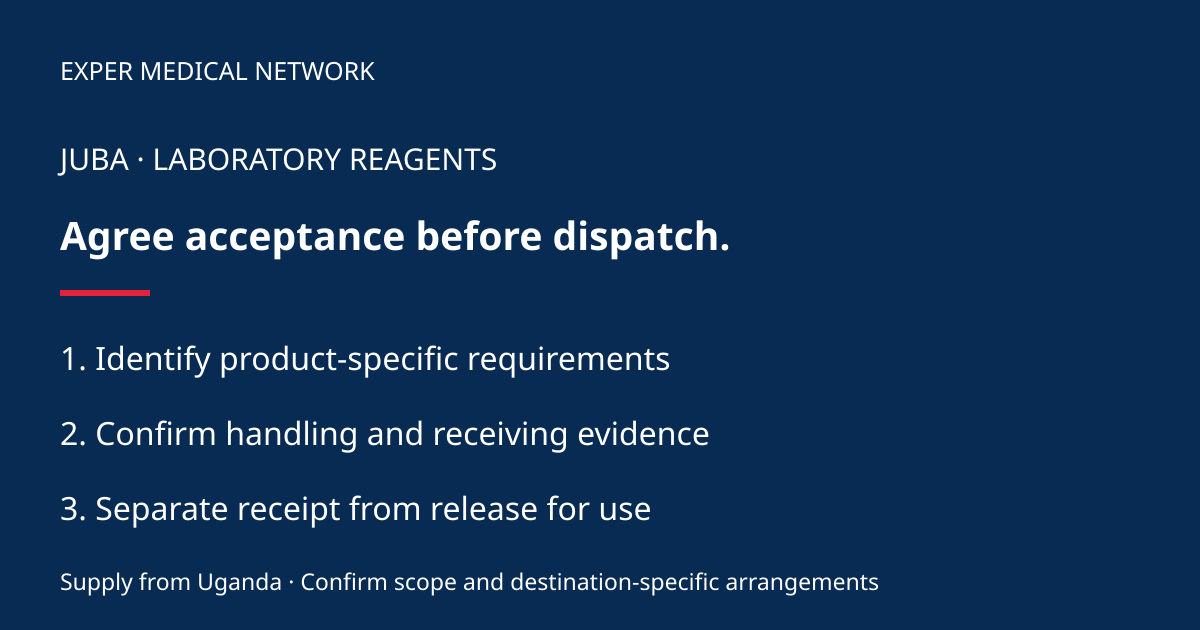
Identify the exact reagent and its requirements
Send the analyser manufacturer and model, reagent reference, pack size and requested quantity. Include the current product instructions or a clear label photograph where available. Ask the laboratory lead to verify compatibility and the storage and transport requirements for each reference.
Do not apply a single refrigerator temperature or transport method to all reagents. WHO’s laboratory quality guidance requires manufacturer storage instructions to be met. FDA guidance also notes that many laboratory reagents are temperature-sensitive. The relevant product documents—not a generic “keep cool” label—must determine the actual conditions.
If transport limits are not clear, obtain clarification before approving dispatch. Do not assume that a storage range automatically answers every transport question or that adding ice is a suitable solution for every product.
Ask whether the proposed delivery arrangement can meet them
Request a written description of the intended packaging, handling and any monitoring evidence. Identify who is responsible at dispatch, during agreed handovers and at the receiving point. Where a temperature record is required, agree what record will be provided and who will review it.
Discuss what happens if there is a delay or the receiver cannot take custody. Ask for the proposed response and contact person rather than a blanket promise of uninterrupted transport. Charges for specialised handling or monitoring, where offered, should be identified before payment.
Exper’s general ability to coordinate delivery does not establish a validated cold-chain service for every reagent. Suitability for a particular product and order must be confirmed. If the required arrangement cannot be demonstrated, resolve it before shipping rather than asking the laboratory to accept an unknown risk afterwards.
Prepare the receiving team and storage space
Nominate a receiver and an authorised laboratory reviewer. Make the approved order, product requirements and supplier contact details available to them before arrival. Confirm that suitable storage is ready and that somebody can receive the shipment at the agreed location.
For illustration, a laboratory may have suitable storage inside the building while the delivery is addressed to an office that closes earlier. The purchasing plan should resolve that handover gap. This example is not a claim about a particular Juba facility or transporter.
Record receipt time, references, quantities, lots, expiry details, package condition and the agreed handling evidence. Keep photographs of discrepancies where useful, without including patient data. A cool-feeling package cannot reconstruct its transport history.
Separate physical receipt from release for use
Agree how discrepancies will be recorded and escalated. If condition or handling is uncertain, identify and segregate the affected stock under the laboratory’s procedure while maintaining the appropriate product conditions. Seek a documented decision from the responsible laboratory team with supplier or manufacturer input as required.
Do not infer that returning a product to refrigeration reverses any previous excursion. Nor should a general web article decide whether an affected lot is acceptable. Product-specific evidence and the laboratory’s quality procedures govern release, rejection and any required checks.
Agree commercial responsibilities for investigating damage, missing evidence, replacement or return before dispatch. This guide does not promise that any particular remedy or return transport is included.
Discuss the order from Uganda
Exper Medical Network supplies medical equipment from Uganda to South Sudan and coordinates delivery with reliable transport companies. Send the exact Juba destination, equipment and reagent list, references and quantities so the required arrangement can be assessed and quoted. Confirm charges, delivery timing, route, handling and documentation for this order.
Our team is based in Kampala. Use the quotation form and South Sudan hub. For the separate equipment side of laboratory planning, see our CBC consumables and running-cost guide.
References reviewed 13 November 2026: WHO laboratory supply-storage guidance and FDA information on refrigeration-sensitive medical products. Neither source establishes a South Sudan import rule or a specific Exper transport capability.
Contact +256 756 789 821 or info.brandexper@gmail.com with your destination, equipment list and quantities. Exper requires 100% payment before delivery. Request current availability and written terms for your order.