
A rack with plenty of holes can still be the wrong rack. Tubes may sit too low, labels may be difficult to see, or the support may not suit their shape. For a Ugandan laboratory ordering replacements or setting up a bench, start with the actual tube references—not a photograph of a similar rack.
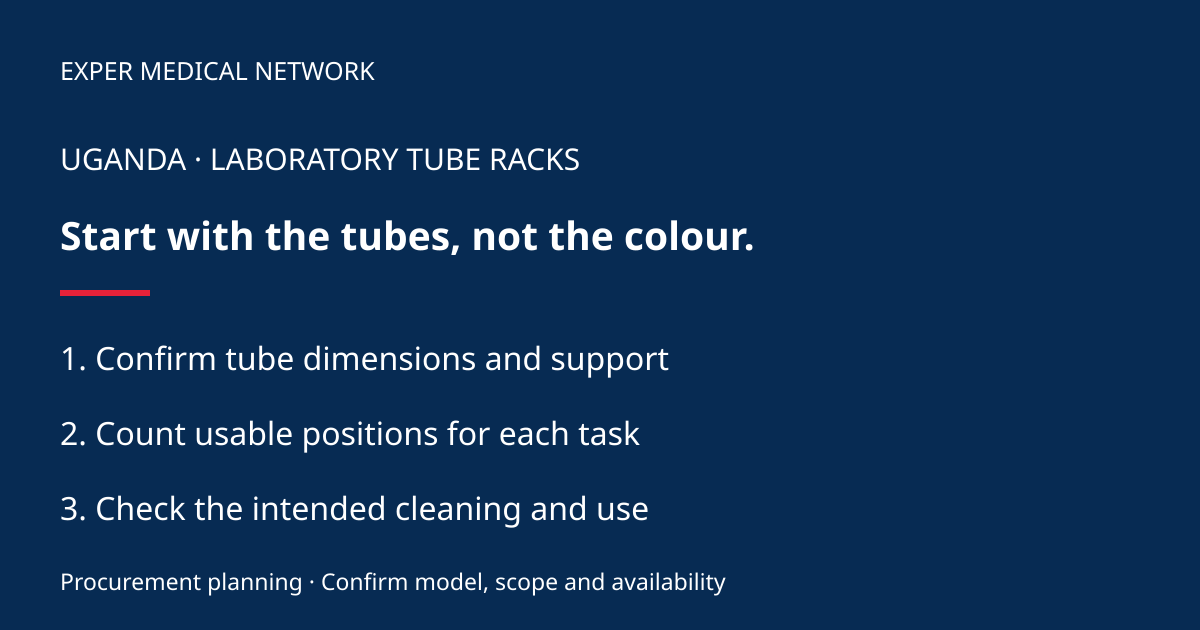
Specify the tubes and the job
List the tube manufacturer and reference, outside diameter, overall height and base shape. Include the capped dimensions where they affect handling. Ask the laboratory team to identify whether the rack is for receiving, preparation, temporary holding or another defined task.
A bench rack is not automatically an analyser rack, a centrifuge adapter or a transport package. If the rack must enter an instrument, request the instrument manufacturer's approved reference. Our centrifuge buying checklist covers the separate rotor-and-tube compatibility question.
Compare supported tube sizes, not nominal capacity
Request the offered rack's tube-size range and usable positions for your tube format. Bel-Art's No-Wire range, for example, has variants with different tube-diameter ranges and numbers of positions. The product family name alone does not identify the right variant.
Where practical, agree a fit check using clean, unused examples of your tubes. Ask users to assess insertion, removal, support and visibility of identification. A tube that enters a hole is not necessarily convenient to handle throughout the intended task.
Illustrative example: the purchasing list says “60-place rack”, but the replacement tube is wider than the previous one. Ordering the old rack description without checking the new tube creates a mismatch. This is a planning example, not a reported customer incident.
Plan bench organisation and identification
Count the racks needed at each work stage, not only the total number of tubes handled in a day. Include the space each loaded rack occupies and how staff will distinguish work awaiting processing from completed work under the laboratory's procedures.
Ask whether row markings and label areas remain readable in the intended arrangement. Colour can support organisation, but it should not replace the facility's sample-identification system. Do not assign a new clinical meaning to a colour simply because that is the rack available.
Confirm cleaning and special-use limits
Tell the supplier if the rack will be used in a water bath or exposed to a particular cleaning process. Request written compatibility for the exact model and intended conditions. Bel-Art documents bath use and steam-autoclaving conditions for its cited range; those claims must not be transferred to every plastic rack.
Have the laboratory approve the cleaning arrangement from the relevant instructions. Avoid choosing a rack on a generic “heat-resistant” description when the intended process needs a defined limit. Ask how damaged, warped or unreadable racks should be identified and removed from use.
Send an order that can be checked on receipt
Specify rack reference, tube sizes, quantity, colour where operationally important and required documentation. At receipt, compare those details with the delivery and complete the agreed fit check before putting racks into routine use.
Send Exper your Uganda destination, tube references, intended tasks, equipment list and quantities through the laboratory equipment enquiry page. Ask for current availability and a documented match. The handover checklist helps record any discrepancy.
Manufacturer reference reviewed 15 November 2026: Bel-Art No-Wire test tube racks. This example does not imply Exper stock or manufacturer representation.
Contact +256 756 789 821 or info.brandexper@gmail.com with your destination, equipment list and quantities. Exper requires 100% payment before delivery. Request current availability and written terms for your order.