
A request for a “blood-testing machine” is too broad to produce a useful quotation. A clinic needing a haemoglobin result has a different equipment brief from a laboratory needing a complete blood count. Before comparing portable meters in Uganda, write down the test the clinical service actually requires.
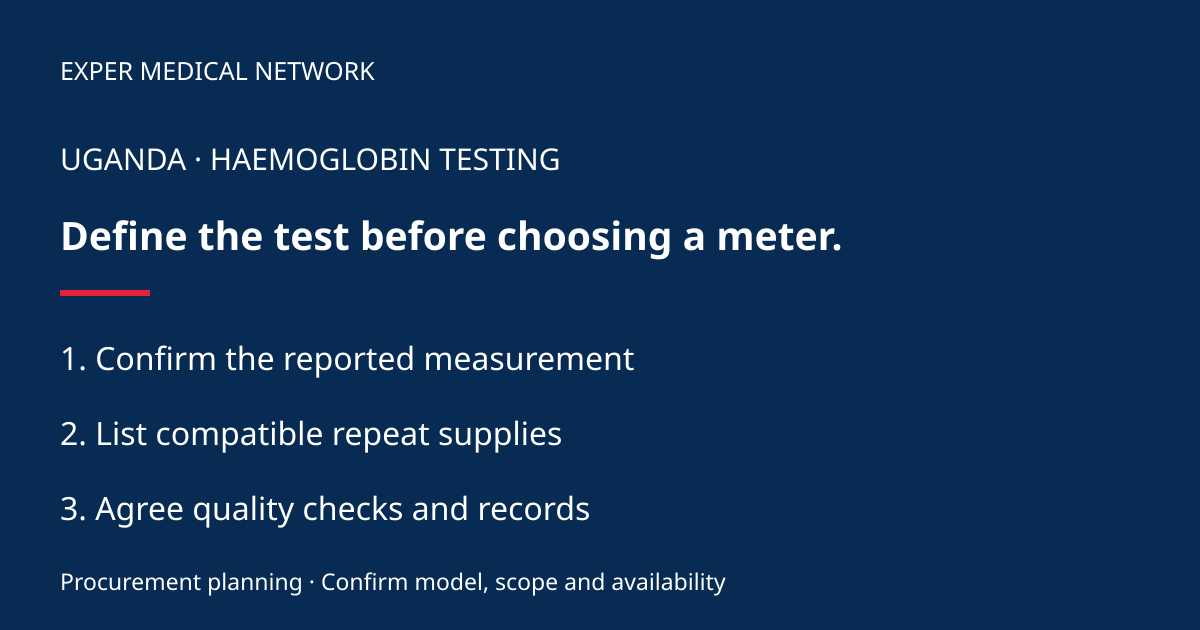
Keep haemoglobin measurement distinct from a CBC
Ask the clinical lead to define the intended service, patient group and required result. Request the offered device’s intended-use documentation and the measurements it reports. A haemoglobin-only system should not be presented as a replacement for a full blood-count analyser.
For example, HemoCue’s Hb 301 documentation describes quantitative whole-blood haemoglobin measurement using a dedicated analyser and its corresponding microcuvettes. This illustrates a specific testing system, not a claim that Exper stocks that model. Our CBC analyser comparison addresses a different purchasing decision.
Identify the consumable that makes each test possible
Ask for the exact compatible cuvette or other consumable reference, pack size and number supplied with the instrument. Do not assume that consumables from another model in the same brand family are interchangeable. The Hb 301 instructions, for example, specify its own microcuvettes and identify them as single-use.
List sample-collection supplies, cleaning items and waste arrangements separately with the clinical team. A photograph showing a complete testing station does not establish what the quotation includes. This article does not prescribe sample collection or interpretation; those require approved procedures and trained personnel.
Compare usable tests, not only the opening purchase
Ask for current pack prices, expiry information, storage instructions and arrangements for repeat orders. Use the clinic’s expected workload to estimate consumption, including the quality activities required by the selected system and the facility’s procedures. Do not invent a universal cost per patient from the price of the reader.
For illustration, a low-volume service may find that a large consumable order creates an expiry problem rather than a saving. Compare quantities against the period in which they can actually be used. Keep confirmed stock, pending orders and unusable stock separate in the purchasing record.
Review storage limits for the offered product itself. Do not transfer a storage rule from one haemoglobin system to another, or assume every consumable needs refrigeration.
Specify quality checks and result handling
Have the laboratory or clinical lead define the required quality-control materials, checks, training and recordkeeping. Ask what the manufacturer supplies and what must be ordered separately. A factory-calibration statement does not answer every question about a facility’s ongoing quality programme.
Request a demonstration using non-patient data of the result display, units and any available print or export function. Confirm whether connectivity, a printer or software is included, optional or unavailable. The clinic also needs a process for linking results to the correct patient and managing errors.
Prepare a service-specific enquiry
Send Exper your Uganda destination, intended testing service, expected workload, equipment list and quantities through our laboratory equipment enquiry page. Ask whether a suitable documented package can be supplied, with current availability, consumable references and support terms confirmed in writing.
Reference reviewed 14 November 2026: HemoCue Hb 301 system information and microcuvette instructions. Manufacturer examples do not imply representation, stock or approval of a new clinical service.
Contact +256 756 789 821 or info.brandexper@gmail.com with your destination, equipment list and quantities. Exper requires 100% payment before delivery. Request current availability and written terms for your order.