
The ECG recorder is working, the patient cable is available—and the replacement paper will not feed properly. A stores request that says only “ECG paper” leaves too many decisions to chance. For a Ugandan clinic replenishing supplies, the best starting point is the recorder’s exact model and its approved paper reference.
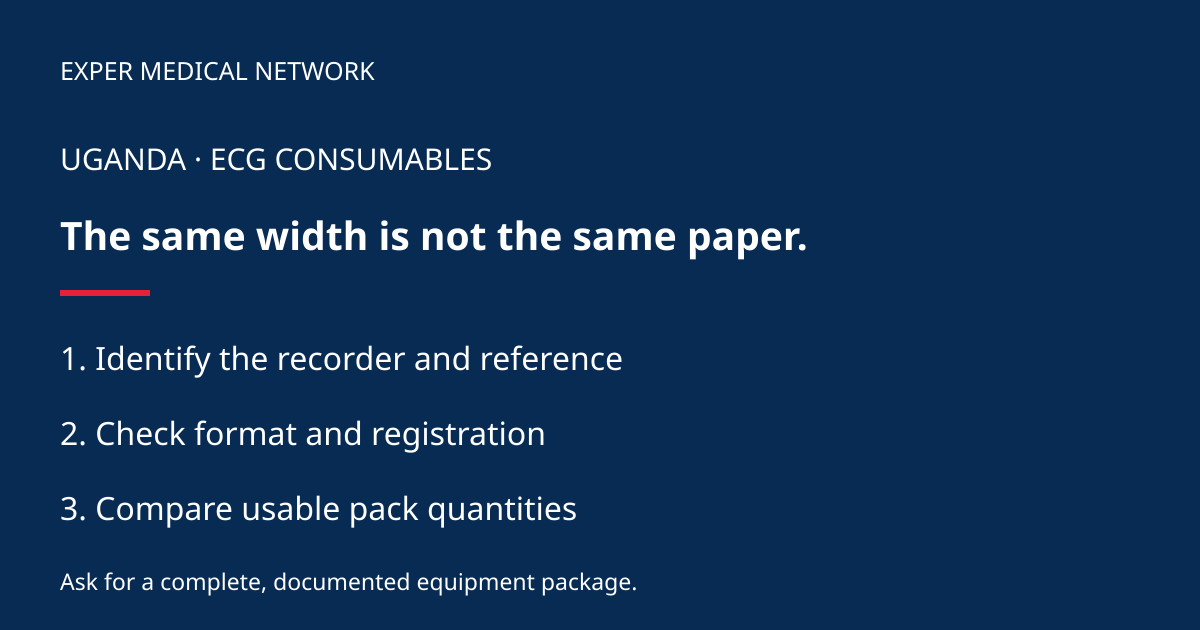
Create a repeatable paper identification record
Record the manufacturer, recorder model and printer configuration. Photograph the current paper packaging and reference label, excluding patient details. Keep a clean unused sample if the supplier needs to compare the format. An old clinical trace is not an appropriate procurement attachment when it exposes patient information.
Include whether the material is a roll or folded pack, its stated dimensions and the manufacturer’s reference. Do not make width the only acceptance criterion. GE HealthCare’s recording-paper information, for example, lists different formats and model compatibility; its accessories catalogue also distinguishes registration features and pack quantities. These examples illustrate what to check, not a claim that every recorder uses GE paper.
Confirm registration and tray requirements
Ask the supplier to confirm the relevant paper-detection marks, holes or other registration features for the actual printer. Where a model supports more than one paper size, check the installed arrangement against the manual. A proposed substitution should have documented compatibility, not merely the reassurance that another clinic uses it.
Have the responsible user or biomedical team resolve uncertain tray configuration. Do not modify the printer or force a pack into place to make an unverified supply work. Our resting ECG purchasing guide covers the broader recorder and report workflow; this checklist is specifically for replenishment.
Compare the unit of supply
Ask whether the quoted price is per roll, pack, box or carton, and request the corresponding length or sheet count. Record usable stock by that same unit. Two quotations labelled “one box” may contain quite different quantities, so the headline price alone cannot establish value.
As an illustrative ordering exercise, distinguish a department’s average consumption from extra use during repeat recordings, training or printer checks. Use your own stock records to estimate demand rather than borrowing a fixed monthly quantity. Confirm supplier lead time for the particular order and set the next review date before the final pack is opened.
Check receipt and storage before bulk use
Match the delivered reference and quantities to the approved request, inspect packaging and retain the lot or batch details where supplied. Ask trained staff to carry out the model’s appropriate paper-loading and test-print checks before distributing the entire batch. Check readability and feeding without using patient data for an unnecessary trial.
Follow the paper manufacturer’s storage instructions and the facility’s clinical-record retention process. A purchase decision must not assume that a thermal printout alone solves long-term record preservation. Keep unopened supplies protected as instructed and investigate unclear or incomplete output through the equipment support process.
Send an enquiry that can be matched
Send Exper the recorder model, paper reference, packaging photograph, required quantity and destination through our equipment and supplies enquiry form. Ask for compatibility and unit-of-supply confirmation in writing. If you also need a device review, use our technical support enquiry; current supply and assessment options must be confirmed.
Manufacturer sources reviewed 7 November 2026: GE ECG recording-paper reference and MAC 7 manual. Use the current instructions for your own recorder.
Contact +256 756 789 821 or info.brandexper@gmail.com with your equipment list, quantities and destination. Confirm current availability, delivery charges and written order terms. Payment is 100% before delivery.