
A low meter price can distract from the more important question: is this system suitable for the way your clinic intends to use it? For a Ugandan clinic purchasing equipment for staff-assisted blood glucose testing, the meter, consumables and infection-prevention arrangements belong in one purchasing decision.
Describe who will use the meter—and for whom
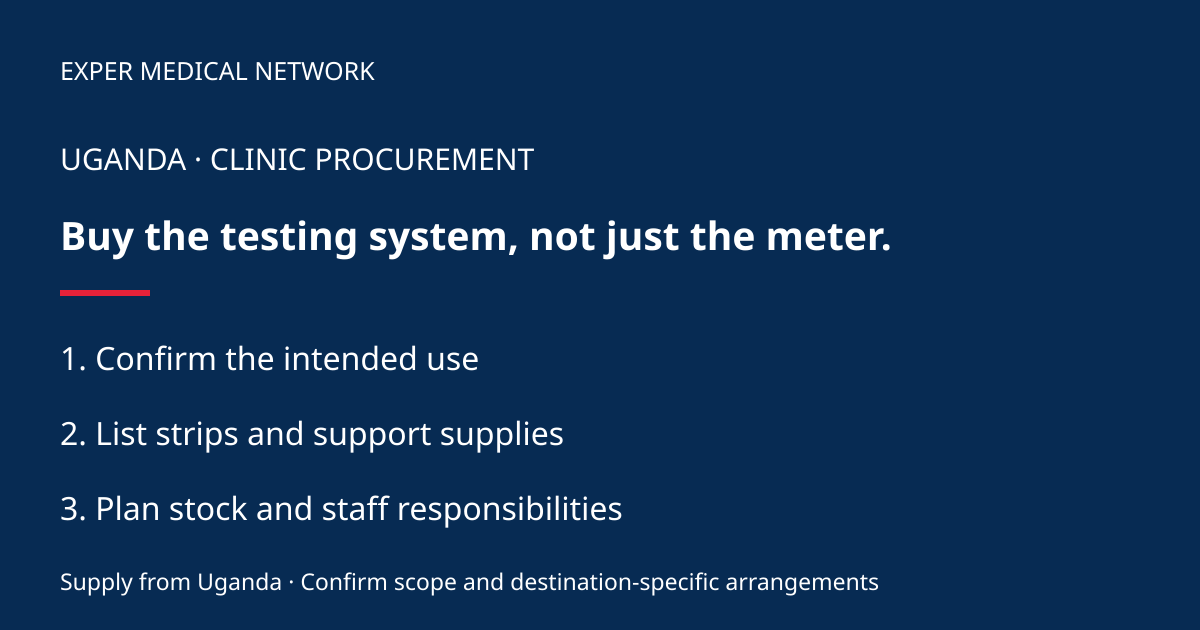
State whether the device will be assigned to one person or used by healthcare staff across patients. Ask the supplier for the exact model and its intended-use documentation, including permitted specimen types, patient groups and limitations. Have the laboratory or clinical lead decide whether those limitations fit the service. A familiar brand name alone does not establish suitability.
CDC advises against sharing glucose meters where possible. Where sharing is necessary, it recommends a professional-use device, cleaned and disinfected after every use according to its manufacturer. A device without manufacturer cleaning and disinfection instructions should not be shared. Fingerstick devices must never be used across people; CDC recommends single-use, auto-disabling devices for assisted testing. These are infection-prevention considerations, not a claim of Ugandan regulatory approval.
Request a complete, itemised package
Prepare separate quotation lines for meters, the exact compatible test-strip reference, appropriate quality-control materials, approved cleaning supplies, single-use fingerstick supplies and sharps containers. Ask which items are included initially and which require repeat orders. Have the responsible team approve the list; this article does not set testing or treatment procedures.
Ask for pack quantities and product instructions, including storage and expiry requirements. Do not assume that strips from another meter in the same brand family will work. If a supplier proposes an alternative, record the change and obtain approval before it enters the order.
Compare the cost of a usable service
Use your clinic’s expected workload to build a purchasing worksheet. Keep meter acquisition separate from recurring supplies and any training or support charges. As an illustrative example, a cheaper meter may be a poor purchasing choice if its required strips cannot be sourced consistently. That is a question to investigate, not a claim about any particular brand.
Ask what happens when a usual strip reference is unavailable. Confirm whether the offered pack sizes suit your consumption and storage arrangements. Request current availability and written supply terms; neither a catalogue listing nor a verbal assurance is a replenishment plan.
Agree ownership before the first delivery
Name the staff member responsible for stock, the person supervising the testing programme and the person who will manage faults. Ask them to define training, quality-control records, result identification and acceptance checks using the selected system’s instructions and local governance requirements.
On receipt, compare model and consumable references with the approved quotation. Keep manuals and support contacts accessible. Our equipment handover checklist can help document missing items rather than allowing them to disappear into a busy first day.
Send Exper a service-specific enquiry
Send your destination in Uganda, intended patient-use arrangement, expected testing workload, quantities and required consumable list. Browse laboratory equipment enquiries and ask Exper to confirm whether a suitable documented package can be supplied, with current pricing and support scope.
Technical reference reviewed 8 November 2026: CDC guidance on blood glucose monitoring. Follow the selected device’s instructions and your facility’s approved clinical procedures.
Contact +256 756 789 821 or info.brandexper@gmail.com with your destination, equipment list and quantities. Exper requires 100% payment before delivery. Request current availability and written terms for your order.